A QR code looks simple from the outside. It is a square made of black and white modules, a phone scans it, and something opens.
What happens behind that scan depends on the type of QR code you created.
A static QR code contains its final information directly inside the code. A dynamic QR code works differently. Instead of permanently storing the final destination, it points to a short web address controlled by a QR platform. That small difference changes what can be done with the code after it has been printed.
The QR code itself does not need to change
Imagine printing 5,000 product labels with a QR code that sends customers to a seasonal promotion.
With a static code, the promotional URL is encoded directly into the QR pattern. If the campaign ends or the page moves, the printed code still points to the old address.
With a dynamic QR code, the printed QR contains a permanent MYQRAD address instead. For example, it might point to a short campaign URL associated with one QR record.
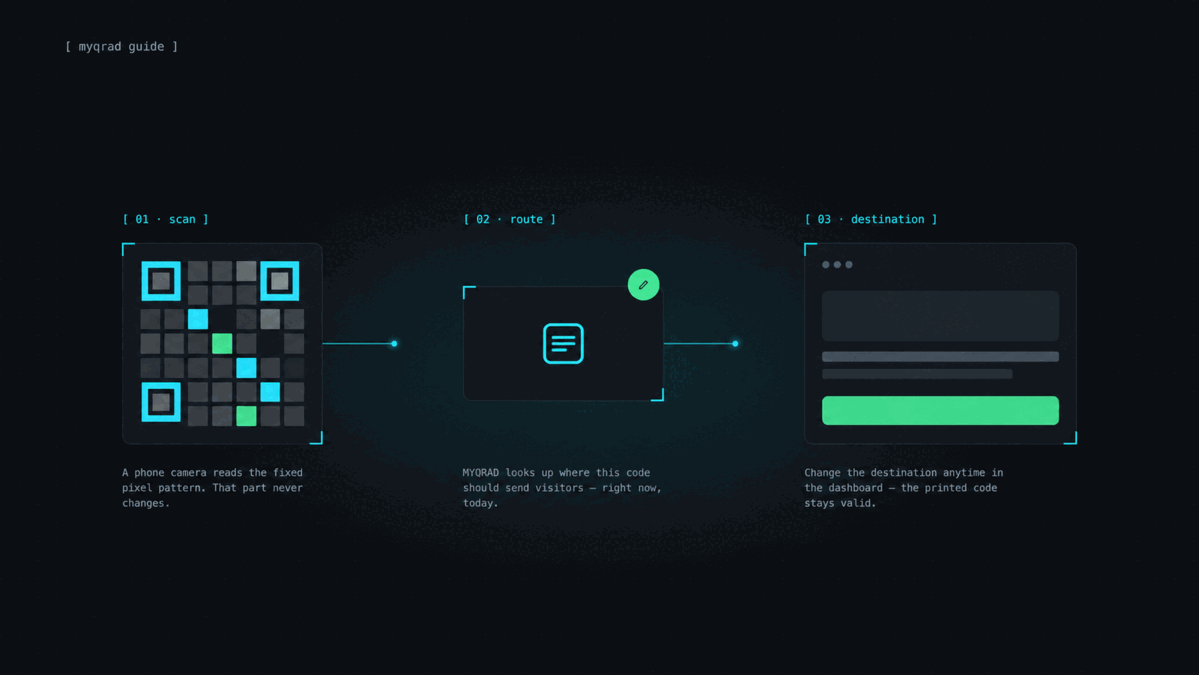
When someone scans the code, MYQRAD receives the request, looks up the campaign, and sends the visitor to the destination currently assigned to it.
The paper never changes. The destination can.
What gets created when you make a dynamic QR code?
A dynamic QR campaign has two separate parts.
- The QR image that people scan.
- The campaign record behind the QR.
The QR image can be printed, placed on packaging, added to a poster, displayed on a screen, or included in almost any other material.
The campaign record lives online. It stores the destination and the settings associated with that QR code.
Because the printed image points to the campaign rather than directly to the final content, the campaign can be updated later without generating a new QR image.
What happens when someone scans it?
The process is quick enough that the visitor normally never notices it.
- A phone reads the QR code.
- The browser opens the campaign URL stored in the code.
- The QR platform identifies the campaign.
- The scan is recorded.
- The visitor is sent to the current destination or shown the campaign landing page.
That intermediate step is what makes the QR code dynamic.
Why is that useful?
The obvious advantage is being able to correct or replace a destination.
A restaurant can update a menu link. A retailer can change a promotion. An event organizer can replace an early registration page with event-day information. A real estate agent can redirect a property sign after a listing is sold.
You do not need to find every printed code and replace it.
Dynamic campaigns also make scan measurement possible because each request passes through the campaign system before the visitor reaches the destination.
That means the same infrastructure that controls the redirect can also count scans and help determine whether a printed campaign is actually being used.
Can a dynamic QR code show a landing page instead of redirecting?
Yes.
A dynamic QR does not have to send someone directly to another website. It can open a purpose-built landing page containing a promotion, contact information, social links, event details, a coupon, a restaurant offer, an email capture form, or other mobile-friendly content.
This can be useful when the QR itself is the beginning of the experience rather than simply a shortcut to an existing website.
Does changing the destination affect the QR image?
No. That is the important part.
The QR image continues to contain the same campaign URL. You are changing what happens after that URL is reached.
As long as the campaign remains active, the same printed code can continue working through multiple changes of destination.
When should you use a dynamic QR code?
Use a dynamic code when the QR will be printed somewhere difficult or expensive to replace, when the destination may change, or when you want to measure scanning activity.
If the content will truly never change and tracking is unnecessary, a static QR code may be enough.
For most marketing, packaging, events, signage and customer-facing campaigns, however, keeping the destination separate from the printed code gives you far more room to make changes later.
That is the real idea behind a dynamic QR code: the square stays the same, while the campaign behind it remains editable.