Dynamic QR codes are often described in technical terms, but their usefulness is easier to understand by looking at what people actually do with them.
At its core, a dynamic QR code creates a permanent bridge between something physical and something digital.
The printed code can stay where it is while the information behind it changes.
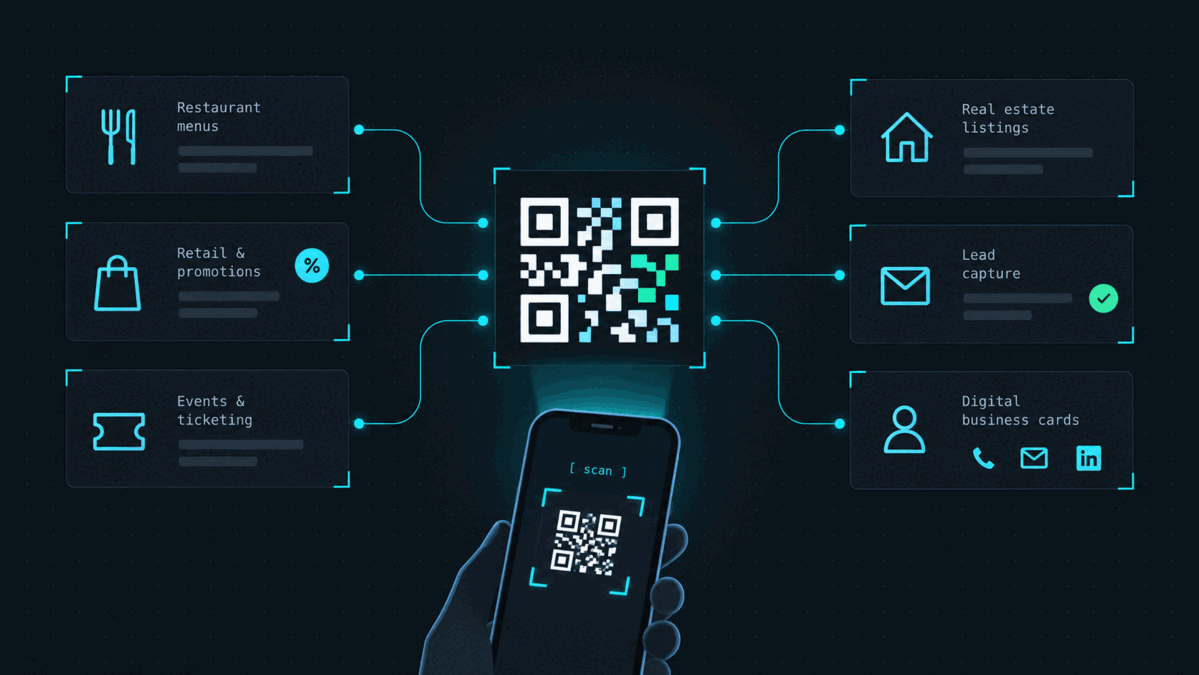
Restaurants and cafes
A restaurant can place one QR code on a table, counter card or window and use it for a menu that changes throughout the year.
The destination might start as a breakfast menu, change to a dinner menu in the evening, or later become a seasonal promotion.
A cafe could also use a QR landing page for a weekend offer, loyalty promotion, event night or email signup.
The important point is that the physical QR does not have to be reprinted every time the promotion changes.
Retail stores
Retailers can use dynamic QR codes on shelf displays, product packaging, flyers and store windows.
A code might lead to:
- a product information page
- a limited-time discount
- care instructions
- a video demonstration
- an online product page
- a signup form
If the product page changes or the promotion ends, the campaign destination can be updated.
Events
Event material is frequently printed weeks or months before the event actually takes place.
That makes dynamic QR codes particularly useful.
The same QR printed on a poster could initially lead to ticket sales. A few days before the event it could point to directions or parking information. During the event it could open the program, schedule or venue map.
Afterward, it could lead to photos, a follow-up page or registration for the next event.
Real estate
Property signs are another good example of why an editable destination matters.
A QR code can lead to a property page, photo gallery, contact page or booking link.
If the listing changes, the destination changes with it.
An agency could also reuse a general sign or printed display for another property instead of throwing it away.
Business cards and contact pages
A QR code on a business card can open a mobile contact page containing a phone number, email address, website and social links.
If somebody changes jobs, updates a phone number or moves to a different website, the printed card can still remain useful if the campaign is dynamic.
This is particularly helpful for cards that are distributed in large quantities or included in packaging and printed literature.
Coupons and promotions
Printed coupons traditionally have a short life. Once the offer expires, the paper is useless.
A dynamic QR changes that relationship.
The same QR can lead to a current promotion while the printed material provides the call to action.
A business can update the offer, redemption instructions or destination without changing the QR image itself.
Packaging
Packaging often stays in circulation much longer than a web campaign.
A QR code on a box, bottle, label or instruction sheet can connect customers to information that may evolve over the lifetime of the product.
Examples include:
- setup instructions
- support information
- product registration
- warranty details
- updated documentation
- accessories or replacement parts
Printed advertising
Postcards, magazine ads, brochures and flyers all have one limitation: once they are printed, their content is fixed.
A dynamic QR gives the digital part of the advertisement some flexibility.
You can change the page behind the campaign while leaving the physical advertisement untouched.
Who can use dynamic QR codes?
There is no particular industry requirement.
They make sense anywhere a physical item needs to connect people to information that may change.
That could mean a small restaurant with ten table cards, a property agent with a handful of signs, a national retailer printing thousands of labels, or an event organizer producing posters for a single weekend.
The useful question is not really whether your business needs a QR code.
It is whether you are comfortable making the destination permanent at the moment you send something to print.
If the answer is no, a dynamic QR code gives you an escape route.