
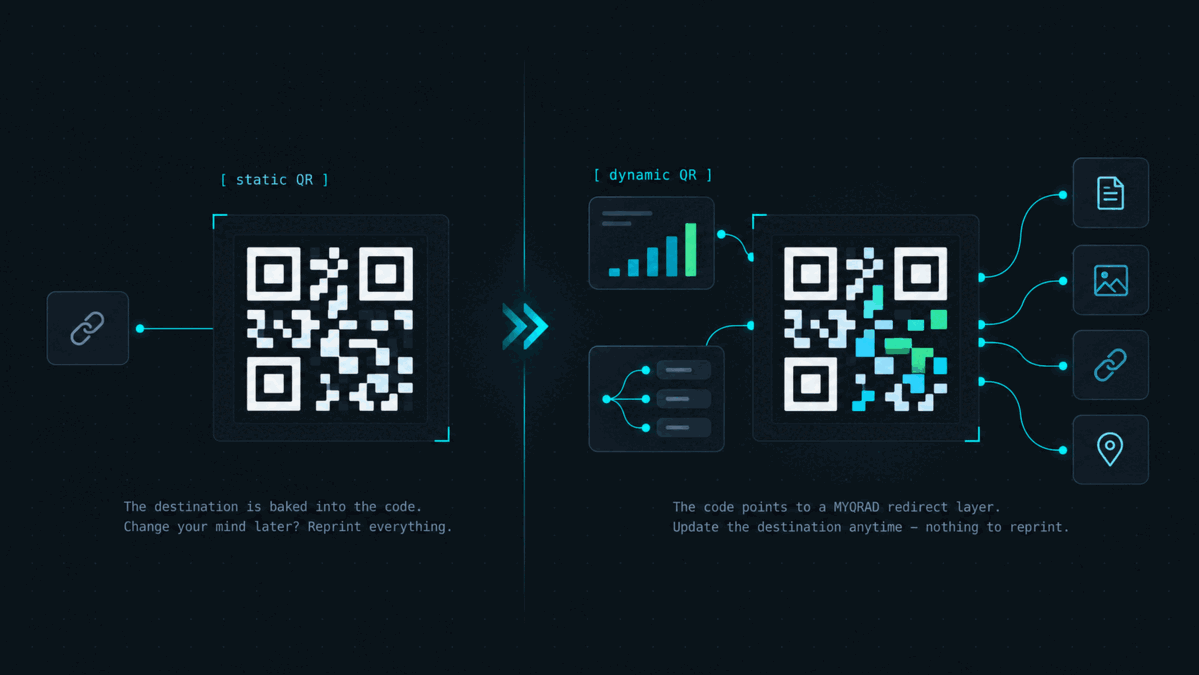
Static and dynamic QR codes can look almost identical when printed. The difference is not really in the square. It is in what happens after somebody scans it.
Choosing the right type before you print can save a lot of trouble later.
What is a static QR code?
A static QR code stores its information directly in the QR pattern.
If you create a static QR containing a website address, that address becomes part of the code itself.
The scanner reads the QR and opens that address.
There is no campaign record in the middle and nothing to edit afterward.
What is a dynamic QR code?
A dynamic QR stores a short campaign URL instead of the final destination.
When the code is scanned, the campaign system receives the request and then sends the visitor to the destination currently assigned to that campaign.
Because the final destination is stored online rather than inside the printed QR, it can be changed later.
When is a static QR code enough?
Static codes are useful when the information truly is permanent.
For example, you might encode:
- a permanent web address
- simple text
- a fixed email address
- information that will never need tracking or editing
They are simple and do not depend on a campaign service continuing to handle the redirect.
If that is exactly what you need, there is nothing wrong with using one.
The problem with printing a permanent destination
The problem appears when a static code is used on something that outlives the web page behind it.
Websites get redesigned. Product URLs change. Offers expire. Staff members leave. Event pages disappear.
The QR code printed on a sign, brochure or package does not know any of this.
It keeps pointing to the address that was encoded on the day it was created.
Dynamic codes give you room to correct mistakes
One surprisingly useful feature of a dynamic QR code is simply being able to fix something.
Maybe the wrong URL was entered. Maybe a campaign page was moved. Maybe somebody discovers an error after 10,000 flyers have already left the printer.
With a dynamic campaign, the destination can be corrected without changing the QR image.
With a static code, the printed material is already committed.
Tracking is another important difference
A static URL goes directly from the scanner to the destination, so the QR system is not involved in the visit.
A dynamic campaign receives the scan first.
That makes it possible to record campaign activity such as total scans and unique visitors.
For printed marketing, this can answer a basic question that is otherwise surprisingly difficult to answer: is anybody actually scanning this?
What about design?
Both static and dynamic QR codes can be styled, but design should never interfere with reliable scanning.
The type of QR code does not determine whether it can have custom colors or visual styling. Static versus dynamic describes how the destination is stored and managed.
Which should you choose?
Use a static QR code when:
- the information is permanent
- you do not need analytics
- you do not expect to change the destination
- the QR is easy to replace if necessary
Use a dynamic QR code when:
- the QR will be printed in quantity
- the destination may change
- you want to measure scans
- the printed item will remain in use for a long time
- you want the option to correct the campaign later
A simple rule
If replacing the printed QR would be inconvenient, expensive or impossible, use a dynamic code.
The additional flexibility exists precisely for the moment when something changes after printing.